
What Is Wedding Journalism? The Wedding Keepsake Couples Are Falling in Love With for 2026
Every wedding vendor creates something different.
Photographers freeze moments—light caught mid-laugh, a hand squeezing another just before vows. Videographers capture movement and sound: the crack in a voice, the swell of music. Florists create living art that blooms for a single day.
But until very recently, no one in the wedding industry focused on the one thing humans have relied on for centuries to preserve meaning and emotion: the written word.
That’s where wedding journalism comes in.
As a wedding journalist based in Colorado, I’m part of a small but growing group of writers who believe weddings deserve more than visual documentation. They deserve to be written about. Reported on. Preserved in language that future generations can read, hold, and return to—long after the flowers have faded and the music has stopped.
What is a Wedding Journalist?
A wedding journalist conducts interviews, gathers quotes, observes details, and writes comprehensive narratives about your celebration. The final product is typically a professionally designed and printed magazine or newspaper dedicated entirely to your wedding day.
"Think of a traditional journalist, but they're completely focused on you, your love story, and your celebration," explains Hannah Strader, owner of Preserved in Print, a wedding journalism company based in Kansas City, Missouri. "Every page is a different moment or aspect of that day."
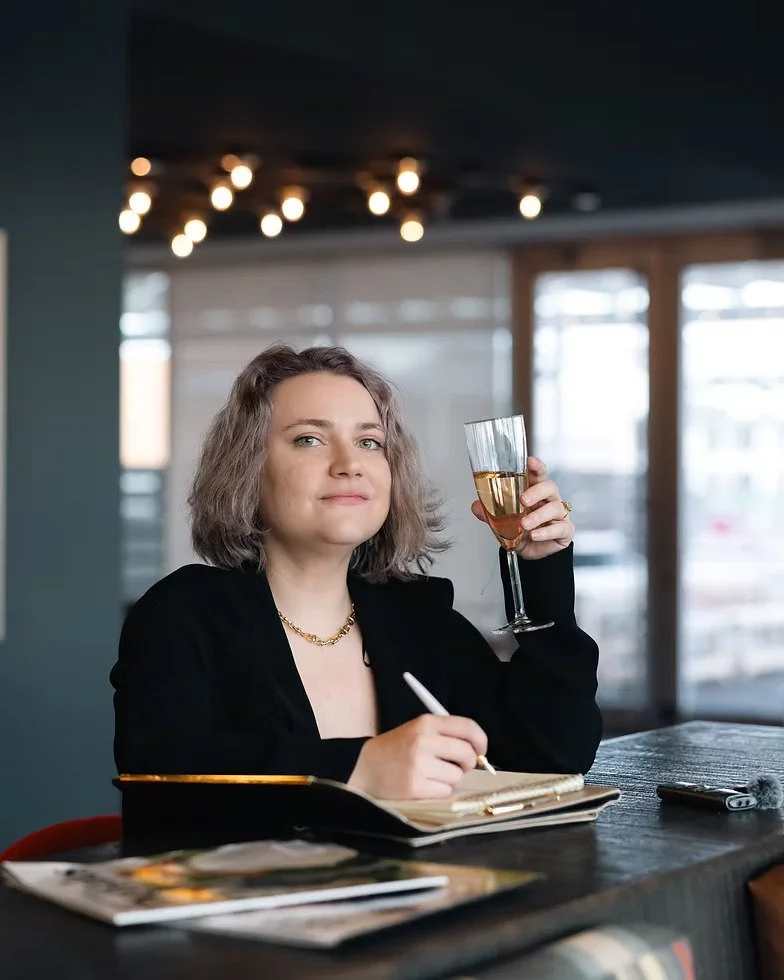
Hannah Strader, the wedding journalist behind Preserved in Print, is a seasoned brand copywriter and print journalist with over 15 years of experience.
Hannah and I connected this month. Preserved in Print is six months more established than The Love Dispatch, but wedding journalism is so new, we’re essentially pioneering this niche together. We both come from professional writing backgrounds—hers in brand copywriting and print journalism, mine in B2B content and digital news—and we both noticed something missing from the wedding industry.
Couples invest heavily in visual documentation. But there’s been no real way to capture the stories behind the moments. The context. The feelings. The things people say when the couple isn’t in the room.
Wedding journalism draws on skills from traditional newsrooms and magazine publishing. We know how to put sources at ease, ask questions that elicit meaningful responses, and craft narratives that honor the complexity of human relationships.
We simply apply those skills to weddings instead of news beats.
Why Wedding Journalism Exists
Wedding journalism starts with a universal truth: You can’t fully experience your own wedding while you’re living it.
Hannah describes her own wedding day realization: "When I looked at my photos, I didn't have context for a lot of what was going on. I was busy talking to my day-of coordinator, or I was catching up with a friend that I haven't seen since high school."
I had a similar moment while planning my own June 2026 wedding. I realized that no matter how present I tried to be, I would never know what it was like to witness us from the outside. I would never overhear the conversations my friends had at the bar, catch the look on my grandmother's face during the ceremony, or know what stories people told about us when we weren't in the room.
That realization became the foundation for The Love Dispatch.
I wanted to create something that let couples experience their wedding through the eyes of the people who love them. Something that preserved not just what happened, but what it meant.
Because here’s the quiet truth: most couples don’t realize what they’re missing until after the day has passed. By then, conversations blur. Emotions settle. Exact words fade into general impressions.
Wedding journalism captures those words while they’re still fresh.
How Wedding Journalism Differs from Photography and Videography
Wedding journalism doesn’t replace your other vendors—it works alongside them.
Your photographer shows you what your wedding looked like. Your videographer lets you hear it again. Your wedding journalist captures what it meant.
"They say a photo is worth a thousand words, but we're the ones writing them."
- Hannah Strader, Preserved in Print
The distinction becomes clearer when you consider the intentional details woven throughout your celebration. Maybe you chose a specific song for your father-daughter dance because it was playing the night your parents met. Maybe your table centerpieces incorporate heirlooms from your grandmother's house. Maybe your signature cocktail is named after an inside joke from your first date.
Your photographer will capture beautiful images of these elements. But without context, a centerpiece is just a centerpiece. A song is just a song.
Wedding journalism preserves the why.
Hannah experienced this at her own wedding. "I had a lot of small things I incorporated that were really sentimental to me, but not everyone necessarily got that story behind it," she shares. She displayed antique bottles her parents had collected over decades, a subtle tribute that meant everything to her, but would have been invisible to most guests without explanation. "There are so many aspects that I kind of felt like needed a place to live."
That’s what wedding journalism provides—a home for meaning.
The lace sewn from your mother’s wedding dress into your hem becomes part of your family record. The road-trip song from your early days together becomes a window into who you were when you first fell in love.
This is what the written word can do that no other medium quite captures. It contextualizes. It explains. It connects the visible detail to the invisible meaning behind every detail.
A photograph shows what was there. Wedding journalism explains why it mattered.
Who Hires a Wedding Journalist?
Wedding journalism appeals to couples who value legacy, story, and the permanence of the written word. These tend to be people who save meaningful cards and letters, who appreciate long-form storytelling, and who want their wedding documentation to have depth beyond the visual.
"It's a luxury experience," Hannah observes—but not because it’s flashy. Because it’s thoughtful
But you don't need a luxury budget to value what wedding journalism offers. At its core, this service is for anyone who recognizes that their wedding day will pass quickly, that conversations will be forgotten, and that the written word has a unique power to capture emotional truth.
If you've ever wished you could have been in multiple places at once during a wedding you attended, you understand the appeal. Wedding journalism lets couples experience their celebration through the eyes and words of their guests, long after the day itself has ended.
The Benefits of Hiring a Wedding Journalist
Wedding journalism offers something no other vendor can: the full story of your celebration, told in words that will still resonate when you read them on your 50th anniversary. Here's what couples gain when they invest in having their love story written down.
Perspectives You'll Never Otherwise Hear
Your wedding day will keep you busy from morning until the last dance.
While you're getting ready, taking photos, greeting guests, and navigating your timeline, your loved ones are having experiences you'll never witness. Your future mother-in-law might share a story with your maid of honor that perfectly captures your partner's character. Your college friends might be laughing about the early days of your relationship at the bar. Your grandparents might be reflecting on their own wedding day and what they hope for yours.
"What I do is offer that alternative perspective," Hannah explains, "not just from people who got to fully enjoy everything that was planned, but also the people who watched you grow into the person you are today, who is getting married and starting this new journey in their life."
A Family Heirloom in Written Form
A wedding magazine becomes something you can display, share, and eventually pass down. Unlike digital files that get lost in cloud storage or trapped in obsolete formats, a printed publication has presence and permanence.
"It's something that you can leave for your kids to have a legacy one day," Hannah notes. "For maybe even your grandkids to keep."
The format invites lingering. People read magazines differently than they flip through photo albums or scrub through videos. Each page tells part of the story. Each quote preserves a voice. Each article captures a perspective that might otherwise have been lost.
Preserved Details Before Memory Fades
Even the most vivid wedding memories soften over time. The specific words from your father's toast, the joke that made your partner laugh during the first dance, the name of the great-aunt who traveled across the country to be there: these details slip away faster than we expect.
"You'll see photos that you can't remember what you were doing in them or what you were talking about," Hannah observes. “Over time, you might forget who they are, even."
Wedding journalism locks these details into place while they're still fresh, while the emotions are still raw, while everyone can still remember what they said and why.
Emotions People Might Not Otherwise Express
The interview process creates space for reflection that everyday life rarely provides. When someone sits down with a wedding journalist, they're given permission to articulate feelings they might never voice otherwise.
Hannah has noticed something surprising in her work: "The grooms are sometimes more insightful than the brides are. Perhaps they have thoughts that they haven't felt were the right moment to express. Or maybe it's a thought they've always had, but didn't think was worth saying out loud."
The same dynamic applies to parents, siblings, and friends. "Sometimes it's easier to be emotional or say things that are difficult to say to someone's face to a stranger," Hannah explains. "I think that there's a value to being prompted and asked questions that maybe you wouldn't normally consider."
A wedding magazine often contains declarations of love, gratitude, and hope that the people in your life might never have expressed without being asked.
Your Wedding Story Without the Time Commitment
Wedding videos require a commitment to experience. You need to set aside time, press play, and watch for however long the film runs. A wedding magazine can be picked up for five minutes or read cover to cover. You can flip to your favorite section, reread a particularly moving quote, or share a specific page with a friend.
Hannah points out another benefit: "It allows you to kind of brag about your wedding without kind of having to, if that makes sense." There's something about the journalistic format that makes sharing feel natural rather than self-promotional.
What to Expect from the Wedding Journalism Process
Approaches vary among wedding journalists, but the process typically includes several phases.
Pre-Wedding Interviews
Before your wedding, your journalist will interview you and your partner about your relationship history and the journey that brought you to this moment. These conversations establish the foundation of your story and help the journalist understand which threads to follow on the wedding day.
Some journalists interview couples together, allowing partners to build on each other's memories. Others separate partners for portions of the conversation.
"I try to separate them," Hannah explains of her approach. " I want to have time to get those more intimate thoughts."
At The Love Dispatch, I typically conduct joint interviews, letting couples share their story together while I listen for the moments that light them up, the details they emphasize, and the threads I'll want to explore further with guests on the wedding day.
For my Full Scoop package, I also offer up to 10 pre-wedding interviews with people whose perspectives you absolutely want to make sure I include in your issue. This could be parents, siblings, wedding party members, or even guests who can’t make it to the big day.
These pre-wedding interviews all help give your wedding journalist context and background for what’s to come.
Wedding Day Coverage
On your wedding day, the journalist documents your celebration through observation and interviews. Approaches vary based on the journalist's style and the couple's preferences.
Hannah has developed creative strategies for capturing natural conversation. "At dinner, I request that I am placed in the seating chart so I can sit next to guests who are talkative or who might want to include me," she shares. This allows for the capture of organic conversations rather than formal interviews that pull guests away from the celebration.
My approach at The Love Dispatch for Full Scoop packages includes a "wedding newsdesk" setup, where guests can stop by to share their thoughts, memories, and well-wishes on their own terms throughout the reception. Think of me as a living audio guestbook, capturing the best messages from your guests.
Post-Wedding Production
After the wedding, the journalist transcribes interviews, crafts narratives, and designs your custom publication. This phase involves significant writing and editing work as raw interview material is transformed into polished, magazine-quality content.
The final product is typically a professionally printed, perfect-bound magazine. Production timelines vary, but expect a few months between your wedding and receiving your finished publication.
Finding a Wedding Journalist
Wedding journalism is still a young field, which means finding a practitioner may require some searching. As this field grows, we expect more wedding journalists will start offering services across the world.
If you're getting married in Colorado, The Love Dispatch can definitely document your celebration. For couples in the Kansas City, Missouri region, Preserved in Print offers beautiful work rooted in the same journalistic values.
We also both travel, so please do inquire with us if you’re interested in booking a wedding journalist to report on your special day. Alternatively, ask your wedding planner if they know of any wedding journalists in your area.
The Future of Wedding Journalism
Wedding journalism is still establishing itself. "There was no such thing as wedding journalism until six months ago," Hannah shares. Couples searching online for wedding journalists often find photographers who describe their style as "journalistic" rather than actual writers who create narrative content.
But the wedding professionals we've both spoken with see the potential and the value of our work. "Wedding planners understand that wedding journalism is definitely going to be a trend once people are told about it," Hannah predicts. "It's just a matter of us individually proving that we can do what we're saying we're going to do."
Hannah and I are committed to building this field together. We share leads when one of us can't serve a couple, we exchange insights about what works and what doesn't, and we believe that community over competition will help wedding journalism find its footing in the industry. We both want more wedding journalists to emerge, more couples to discover this service, and more love stories to be preserved in the written word.
Why Words Matter
We live in an increasingly visual world, where quick photos and short videos often stand in for deeper documentation. But the written word has a permanence and intimacy that transcends other media. Love letters from past generations move us in ways photographs cannot. Diaries and journals offer windows into lived experiences that no image can capture.
Wedding journalism taps into this ancient truth. Your wedding day is more than a visual event. It's a collection of stories, emotions, relationships, and moments that deserve to be captured in the medium humans have used throughout history to preserve what matters most.
"You need something that AI can't kick you out of," Hannah reflects on why she chose this path. "And emotions are something that are deeply important, and so are people's wedding days."
Your wedding will last a day. The photos will capture moments. The video will record scenes. But the stories, the words your loved ones spoke, the feelings they expressed, the perspectives they shared: those deserve to be written down, designed beautifully, and preserved forever.
That's what wedding journalism offers. The missing piece that tells the full story of the most important celebration of your life.
Your wedding deserves to be on the record.
